Best Compression for POTS: Knee-High vs Thigh-High vs Waist-High
Compression socks, stockings, shorts, and abdominal binders compared for POTS. Why I wear JOBST daily, how to get them on, and the crash that taught me never to skip.
 Jake Forrester
(Updated: )
Jake Forrester
(Updated: )
This article contains affiliate links. I may earn a small commission at no extra cost to you. Full disclosure
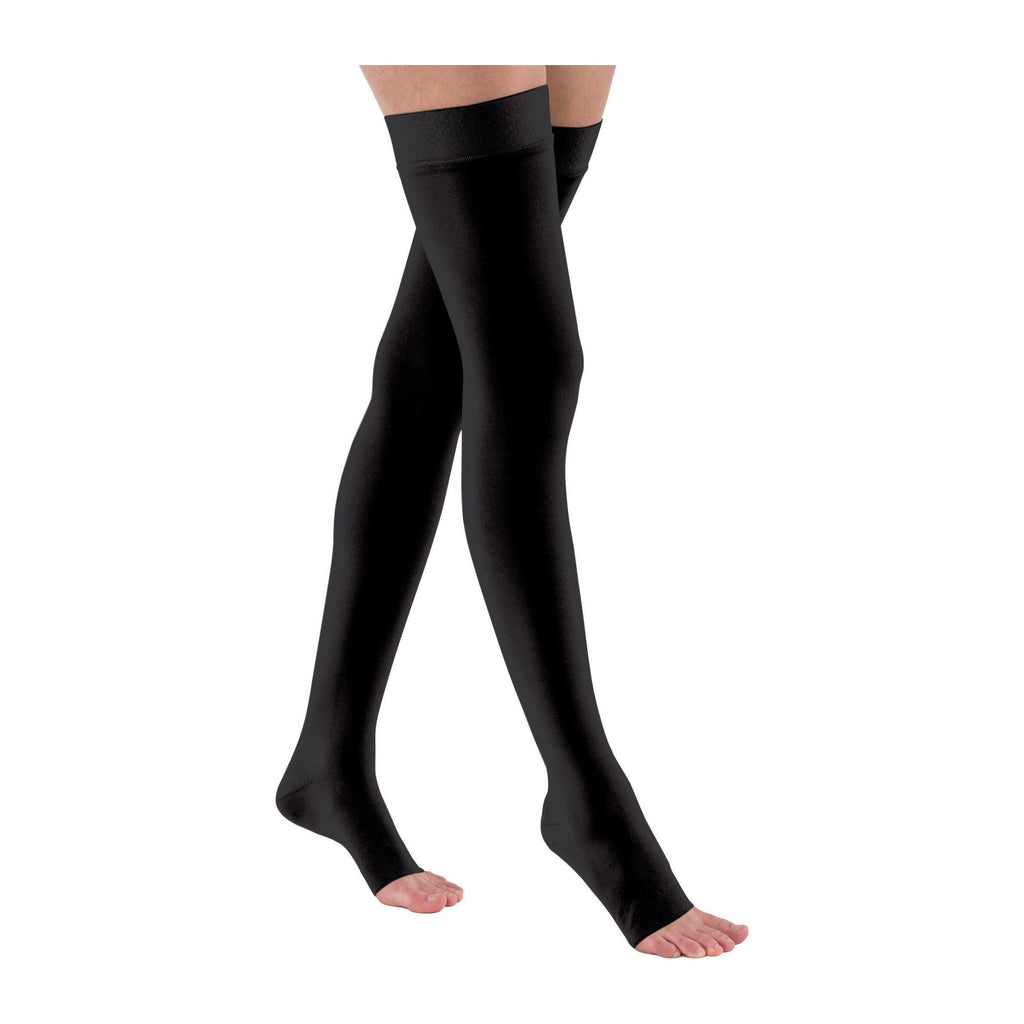
JOBST Relief Thigh High 20-30mmHg, Open Toe
$45-76
Pros
- Noticeably reduces heart rate and blood pooling symptoms
- 20-30mmHg is much easier to put on than 30-40mmHg
- Open toe protects toes from damage during all-day wear
- Goes on sale frequently — bought 5 pairs at $45 each
- Sheer enough to pass as athletic gear under normal clothes
Cons
- Takes a few minutes to put on, even with practice
- Silicone band can slip on very hairy legs
- Work against the weather — cooling in winter, warming in summer
- Not as effective as waist-high according to research
TL;DR — The Short Version
- My pick: JOBST Relief Thigh High 20-30mmHg, Open Toe — I wear these every single day
- Get open toe — closed toe can damage toes during all-day wear
- 20-30mmHg works — easier to put on than 30-40, and I still see real benefit
- Thigh-high > knee-high for the “slow damage” pattern of POTS
- Buy on sale — I got 5 pairs at $45 each (currently listed around $76)
- Never skip them. I learned that the hard way.
The Day I Skipped Compression
Compression stockings for POTS work by squeezing blood back toward your core — doing mechanically what your blood vessels can’t, and directly counteracting blood pooling in the legs. It’s one of the most consistently recommended treatments for POTS. Here’s how I learned to never skip it.
I was having a great day. Heart felt calm, energy was decent, brain was actually working. Laundry day — my compression was in the wash.
“I feel good. The dog walk won’t be long. What’s the point?”
I was gone maybe 10 minutes. That’s it. By the time I got back, my heart was going haywire. I laid down. Heart rate wouldn’t come back down — just stuck high, pounding, for hours. What started as a quick walk without compression turned into a full crash. PEM for days.
All because I didn’t spend two minutes putting on leggings.
Here’s the thing about my POTS that makes compression non-negotiable: it’s not the kind where you stand up and immediately feel terrible. Mine is more like taking damage over time. My blood vessels constrict, but not quite enough. Everything seems fine for a while. Then suddenly it’s not fine at all, and by then the crash is already happening. You can’t just “feel it out” — by the time you feel the symptoms, you’re already behind.
I wrote exactly one line in my health journal that day: “I will not skip compression leggings.” And I haven’t since. Whether it’s medical grade compression stockings or compression leggings, something goes on before I leave the house.
Best Compression Stockings for POTS: What I Use Daily
I wear JOBST Relief Thigh High 20-30mmHg, Open Toe every day. Here’s why I landed on these specifically.
Why 20-30mmHg Instead of 30-40
Clinical guidelines for severe POTS typically recommend 30-40mmHg. I had a 68bpm increase on my tilt table test, so by the numbers, I should probably be in the higher compression.
But here’s my reality: 20-30mmHg is much easier to put on. And compression you actually wear every day matters way more than compression that sits in a drawer because it’s a wrestling match to get into.
I’ve found 20-30mmHg gives me meaningful symptom reduction. Could I get more benefit from 30-40? Probably. But the tradeoff isn’t worth it for me right now.
Why Open Toe
I’ve seen firsthand what happens with closed-toe compression over months of all-day wear — damaged toes. Open toe eliminates that problem entirely.
There’s a practical bonus too: medical appointments. When you’re at the doctor and they want to check your feet, you don’t have to take the whole stocking off. Just roll it up. Small thing, but when you’re fatigued and dreading the effort of removing and reapplying compression, it matters.
How to Actually Put Them On
This is the part nobody explains well, and it’s the number one thing that scares people off compression. So here’s exactly how I do it.
1. Start lying down. I put mine on in bed after showering. Post-shower bed rest is already something I’d be doing anyway — hot showers worsen POTS symptoms, so I rest about 10 minutes after every shower. Putting on compression during that rest is just efficient time management.
2. Turn them inside out down to the toe. Reach inside the stocking and grab the toe area. Pull it inside out so only the foot portion is right-side-out.
3. Slide your foot in and get the heel positioned. This is the fiddly part. Make sure the heel pocket is actually on your heel, not rotated to the side.
4. Pull up in small sections. This is the key. Do NOT try to yank them all the way up at once. You’ll stretch them out, it’ll be harder, and you’ll exhaust yourself. Pull up about two inches of fabric at a time, smoothing as you go.
5. Take your time. I spend about 10 minutes putting both on. There’s no rush. You’re lying down, you’re resting — let it take as long as it takes.
The whole process is not that bad once you’ve done it a few times. The first time feels impossible. By the third time, it’s just slightly annoying.
When I put them on: I don’t follow the clinical recommendation to put them on before getting out of bed. I stay horizontal with feet elevated for the first couple hours, then shower late morning. I put them on while resting in bed after my shower, then wear them the rest of the day.
Knee-High vs. Thigh-High vs. Waist-High
Research shows a clear hierarchy: waist-high is most effective, then thigh-high, then knee-high. This makes sense — the abdomen is the biggest blood pooling area, so compressing it gives the most benefit.
But research results and daily life are different things.
Knee-high barely helped me. I started with knee-highs and noticed only a slight improvement over a couple weeks. (If knee-highs are where you’re starting, I’ve written a buying guide specifically for compression socks — brands that test their mmHg, sizing, and how to spot a listing that’s lying about its compression level.) Blood pools in your entire leg, not just below the knee, so this makes sense. I know someone with severe ME/CFS who wears knee-highs because putting on thigh-highs is too exhausting — they take whatever benefit they can get. But it’s an energy compromise, not the ideal choice.
Thigh-high is my sweet spot. Thigh-highs made a clearly noticeable difference over knee-highs. Clear, consistent benefit without the practical downsides of waist-high. I’ve worn them daily for close to a year and don’t plan to change. If you have the energy to manage thigh-highs, that’s what I’d recommend at minimum.
Waist-high I haven’t tried. I’ll be honest about why: comfort concerns. As a guy, the idea of all-day compression around the waist and groin doesn’t sound comfortable. There are also practical issues — bathroom trips become a production. If you’re someone who can tolerate them, the research suggests they’d be the most effective option.
Compression Shorts for POTS: The Middle Ground
Compression shorts come up constantly in POTS groups, and I understand the appeal. They’re faster to put on than thigh-highs, they don’t look medical, they work under normal clothes, and if you already wear athletic gear they feel like nothing new. For anyone whose main barrier to compression is the daily effort of getting stockings on, shorts are a reasonable place to start.
I don’t wear them myself — thigh-highs are my daily driver — so treat this as research plus what I hear from other patients, not a personal review.
The problem with most compression shorts is where the waistband lands. Remember the hierarchy: waist-high beats thigh-high beats knee-high, because the abdomen is the largest blood pooling area. Most consumer “high-waisted” compression shorts stop at or below the natural waist, which means you’re compressing your thighs and hips and missing the abdomen — the exact place the research says matters most. A common complaint from POTS and EDS patients about even medical-grade shorts is that the waistband sits nowhere near the natural waist.
That doesn’t make them useless. It makes them a leg garment with a short inseam, and you should judge them on that basis rather than expecting abdominal compression they don’t deliver.
What to look for
- Graduated medical-grade compression, 20-30mmHg. Athletic “compression” shorts from a sporting goods store are usually 8-15mmHg — that’s shapewear, not a medical garment, and it won’t do much for orthostatic symptoms.
- A rise that actually reaches your waist, if abdominal pooling is your problem. Check reviews for where the waistband sits rather than trusting the product photo.
- Whether you’ll pair them with socks. Shorts that end mid-thigh with nothing below can leave blood pooling in your calves and feet. Several patients I’ve read describe wearing shorts over 20-30mmHg thigh-highs or knee-highs, which is a fair setup if your pooling is spread out.
Options worth knowing about
Mojo Compression Shorts, 20-30mmHg (M819) are the ones that come up most often as an actual medical-grade option, and there’s a women’s version of the same garment. They’re sold mainly for lipedema and lymphedema, and the recurring caveat from POTS and EDS patients is the one above — the rise is lower than the marketing suggests. Reviewers who like them tend to describe them as a companion to thigh-high compression rather than a replacement.
If you want something purpose-built for POTS rather than adapted from lymphedema wear, Supacore’s leggings are covered further down — they’re designed around core and pelvic compression specifically, though they’re not on Amazon and they stop at the ankle.
My honest read: if your pooling is mainly in your legs and the effort of stockings is what’s stopping you, compression shorts are a real option and better than no compression at all. If your pooling is abdominal, shorts are likely to disappoint you and a binder or waist-high garment is the more direct answer. And if it’s in your feet like mine, shorts alone won’t touch it.
The Abdominal Binder Experiment
I tried an abdominal binder. It lasted about a day.
The problem: GI issues. Autonomic dysfunction doesn’t just mess with your heart — it messes with your gut too. POTS and GI dysfunction go hand in hand. Wrapping something tight around my abdomen when my gut was already a mess just hurt. A lot.
Another POTS patient I’m close to had a different experience. They used a four-panel abdominal binder that gave compression from chest to hips — their neurologist recommended compressing the entire abdomen, not just the waist. It helped with lightheadedness and brain fog when standing. They wore it for years.
They eventually stopped because severe ME/CFS meant less and less time out of bed. Putting it on every time they got up took strength they didn’t have anymore. As they put it: “I used to think it helped my brain fog when standing. Now I have too much brain fog to know what I’m feeling.”
I’ve since worked on my GI issues and they’re much better now, but I haven’t gone back to try the binder again. If your gut is healthy and you can tolerate the pressure, an abdominal binder targets that big abdominal blood pooling area the research highlights. But if you have any GI comorbidities — and a lot of POTS patients do — proceed carefully.
A Note on Neck Compression
This one surprised me: a fellow POTS patient found that a soft cervical collar helped with brain fog. There’s actually a 2020 study showing that neck compression reduced POTS symptom scores during tilt testing — the theory is it helps maintain blood flow to the brain by gently compressing the jugular veins. Any soft collar should work; this isn’t a brand-specific thing. I haven’t tried it myself, but it’s worth knowing about if brain fog is your worst symptom.
Tips for Wearing Compression with POTS
Buy on Sale
JOBST thigh-highs fluctuate a lot in price. I’ve seen them as low as $45 and as high as $76. When you find them on sale, buy several pairs. I bought five pairs at $45 each and it was one of the smartest purchases I’ve made. You need multiple pairs anyway since you’re wearing them daily and need to wash them.
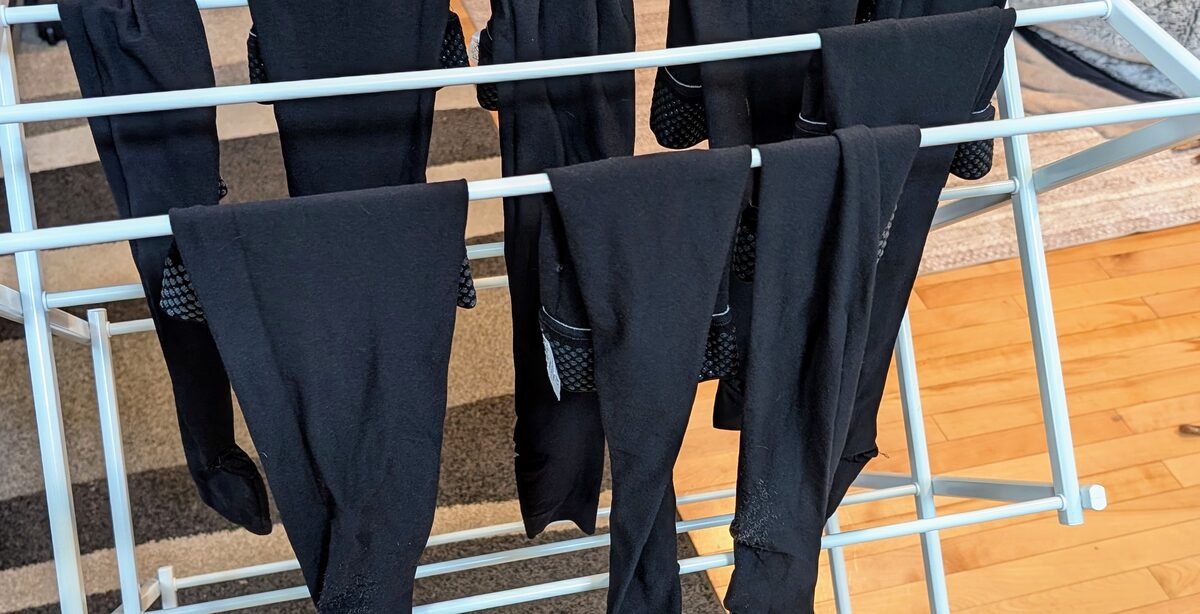
One care note: these shouldn’t go in the dryer. I hang mine on a basic foldable drying rack and they’re dry by morning.
Year-Round Wear: A Correction
I originally wrote this section saying compression felt almost cooling in summer. I need to walk that back, because I wrote it in winter and hadn’t actually been through a summer in them yet.
Having now done a full year: they work against the weather in both directions. In winter they make my legs feel colder than normal. In summer they add real warmth. Cooling when you want insulation, insulating when you want cooling — the worst of both worlds.
It’s not a dealbreaker. They’re still nothing like thermal underwear, and I wear mine every day through a Pacific Northwest summer because the symptom relief beats the discomfort. Heat is already a POTS trigger, so adding any warmth is an annoying trade — but a bad heat day in compression still beats a bad blood pooling day without it.
If you run hot, or you’re somewhere seriously humid, plan for summer to be the harder season rather than assuming the fabric will help. That’s the opposite of what I originally told people, and I’d rather correct it than leave it.
Compression for Men
Most POTS content is written by women, so I want to address this directly: wearing thigh-high compression as a guy is not a big deal.
They look like sporty athletic gear under shorts. Nobody has ever commented on them. I don’t think most people even notice. If you’re self-conscious about it, wear pants — they’re completely invisible under jeans or joggers.
If you have very hairy legs, you might benefit from shaving where the silicone grip band sits at the top of the thigh-high. The band needs skin contact to stay up, and thick hair can interfere with that. I’ve shaved my legs occasionally but I’m not very hairy, so I haven’t noticed a huge difference either way.
Thigh-highs don’t have any of these issues.
Other Options Worth Knowing About
Supacore POTS Compression Leggings
Supacore makes compression leggings specifically designed for POTS, with a patented compression pattern targeting the pelvis and core. They offer both men’s and women’s versions at $144, with an extra high waist option at $159. They’re not on Amazon. No affiliate link here, just passing along what people are talking about.
I haven’t tried them, but I have one concern: they stop at the ankles. They don’t cover the feet at all. My blood pooling is worst in my feet, and I worry that compressing the legs without the feet could actually trap blood below the compression line. If your pooling is mainly in your calves and thighs, these might work great. If it’s in your feet like mine, you’d probably still need compression socks underneath — which kind of defeats the purpose of a single-garment solution.
Are Compression Garments FSA Eligible?
Yes, compression garments are FSA and HSA eligible. My insurance didn’t cover them, but since they treat a diagnosed medical condition, they’re a legitimate tax write-off through your flexible spending account. Some insurance plans do cover medical-grade compression with a prescription, so it’s worth asking your provider. Even without insurance coverage, the FSA/HSA route takes some of the sting out of buying multiple pairs.
Compression is one half of the mechanical equation — the other half is keeping your sodium and fluid volume up. And if your POTS comes with flushing, brain fog, or GI issues that seem disproportionate, you might be dealing with MCAS too.
If you’re on the fence, just try a pair. JOBST Relief Thigh High 20-30mmHg, Open Toe is what I wear every day, and it’s the single most impactful purchase I’ve made for managing my POTS.
Frequently Asked Questions
- Do compression shorts work for POTS?
- They can, with one important caveat. Compression shorts are easier to put on than thigh-high stockings and less visible under clothes, which makes them a reasonable option if the daily effort of stockings is what's stopping you. But most consumer high-waisted compression shorts stop at or below the natural waist, so you get thigh and hip compression while missing the abdomen — the largest blood pooling area and the one research says matters most. Look for graduated medical-grade 20-30mmHg rather than 8-15mmHg athletic shapewear, and expect to pair shorts with compression socks if your pooling extends to your calves or feet.
- What compression level should I get for POTS?
- Clinical guidelines typically recommend 30-40mmHg for POTS, but I use 20-30mmHg and it works well enough. The lower compression is significantly easier to put on, which matters a lot when you're doing it every day. If you can tolerate the effort of 30-40mmHg, go for it — but don't let perfect be the enemy of good. Compression you actually wear beats compression that stays in the drawer.
- Should I get knee-high, thigh-high, or waist-high compression for POTS?
- Research shows waist-high is most effective, followed by thigh-high, then knee-high. The abdomen is the biggest blood pooling area, which is why waist-high wins in studies. I use thigh-highs because they're a good balance of effectiveness and practicality. Knee-highs didn't do much for me personally, but your experience may vary depending on how your POTS presents.
- Why open toe instead of closed toe compression stockings?
- Someone I know with POTS wore closed-toe compression for a long time and it damaged their toes from all-day wear. Open toe avoids that issue entirely. It's also practical for medical appointments — your doctor can check your feet without removing the stockings. Just roll them up.
- Can men wear thigh-high compression stockings?
- I'm a guy and I wear thigh-highs every day. They look like athletic gear under shorts, and honestly nobody notices or cares. If you have very hairy legs, you might want to shave where the silicone grip band sits to prevent slipping. The main practical concern for men with waist-high options is comfort, which is one reason I've stuck with thigh-highs.
- Do compression garments make you hotter in summer?
- Somewhat, yes. I originally wrote that they felt almost cooling, but I'd only worn them through winter at that point. After a full summer in them I'd put it differently: they work against the weather in both directions. In winter they make my legs feel colder than normal, and in summer they add noticeable warmth — the worst of both worlds. They're still nothing like wearing thermal underwear, and I wear them year-round in the Pacific Northwest because the symptom relief is worth it. But if you run hot or live somewhere seriously humid, plan for them to make summer a little harder rather than easier.
Related topics:

Jake lives with severe POTS and MCAS. He writes about what actually works — tested on himself, tracked obsessively, and shared so you don't have to figure it all out alone. Read more about Jake →