Best Electrolytes for POTS: 10+ Brands Tested (2026)
Sodium per serving, taste, and crash-prevention ranked for 10+ brands. What I take daily for POTS, what made me sick, and which ones are expensive water.
 Jake Forrester
(Updated: )
Jake Forrester
(Updated: )
This article contains affiliate links. I may earn a small commission at no extra cost to you. Full disclosure
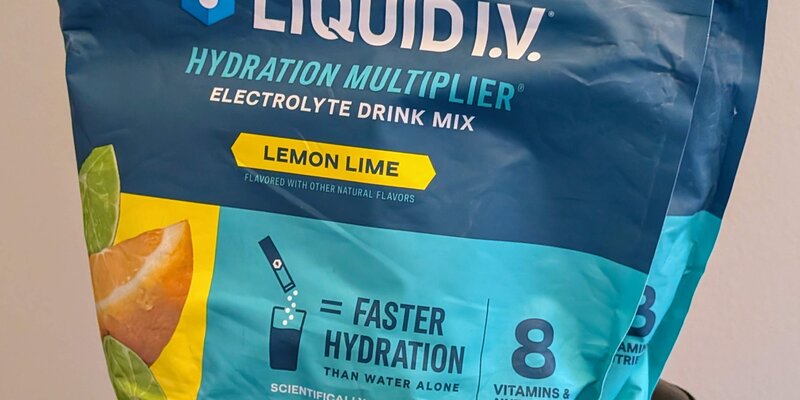
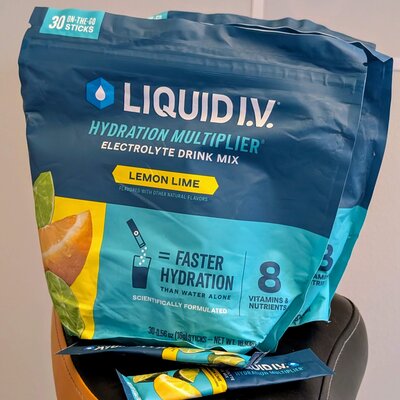
Liquid IV Hydration Multiplier — Lemon Lime
$23.98
Pros
- Good sodium per serving (560mg) without being overwhelming
- Lemon-lime flavor is mild and doesn't linger
- B vitamins included — one less supplement to manage
- Easy to find at any grocery store or Amazon
- Good entry point for newly diagnosed patients
Cons
- Limited to one packet per day due to B vitamin content
- Non-lemon-lime flavors have a smell that lingers for hours
- Powder residue sticks to everything
- Not enough sodium on its own — you'll need other sources too
TL;DR — The Quick Picks
- Daily driver: Liquid IV Lemon Lime — 560mg sodium, tastes good, easy starting point
- Underrated MVP: V8 Original — 920mg sodium per 11.5oz can, plus potassium, and it’s actual food
- Community favorite: Vitassium — salt capsules made specifically for dysautonomia patients
- Best drops: Buoy Rescue Drops — 300mg sodium, unflavored, no sweeteners. The only drops worth it for POTS
- Skip it: LMNT (GI nightmare for many of us), original Buoy Hydration Drops (50mg sodium — why bother?)
Sodium Comparison: Electrolyte Drinks for POTS
| Product | Sodium/Serving | Format | Approx. Cost/Serving | Notes |
|---|---|---|---|---|
| V8 Original | 920mg | Beverage (11.5oz can) | ~$0.85 | Real food, includes potassium. My morning staple. |
| NormaLyte | 851-862mg | Powder stick | ~$1.27 | Made for dysautonomia patients. Sponsors Dysautonomia International. Also available as capsules (500mg sodium, 100mg potassium). |
| LMNT | 1,000mg | Powder packet | ~$1.50 | High sodium but causes GI distress for many POTS patients. |
| Drip Drop ORS | 330mg | Powder packet | ~$1.00 | ORS formula with potassium and magnesium. |
| Liquid IV | 560mg | Powder packet | ~$1.25 | Moderate sodium, includes B vitamins. Limit 1/day. |
| Vitassium | 500mg | 2 capsules | ~$0.38 | Salt capsules designed for autonomic disorders. No taste, no fuss. |
| Buoy Rescue Drops | 300mg | Liquid drops | ~$0.75 | 6x the original formula. Unflavored, no sweeteners — useful if you react to flavorings. |
| Buoy Hydration Drops | 50mg | Liquid drops | ~$0.32 | The original formula. Essentially useless for POTS sodium needs. |
I haven’t tried every product on this list. Products I’ve personally used are reviewed in detail below. Sodium values are from manufacturer labels as of 2026.
Why POTS Patients Need So Much Sodium
If you’re reading this, you probably already know the basics: POTS means your blood doesn’t stay where it should when you stand up, your heart races to compensate, and sodium helps your body retain fluid to keep blood volume up.
Dysautonomia International recommends 3,000-10,000mg of sodium per day for POTS patients. My cardiologist told me to aim for about 6,000mg daily. The average American eats around 2,300mg. So yeah — you need a lot more salt than normal.
The tricky part isn’t knowing you need more sodium. It’s figuring out how to get it — whether through oral rehydration solutions, sodium supplements for POTS, or salty food — without feeling terrible in the process.
My Daily Sodium Routine
Here’s what an average day looks like for me:
- Morning: A V8 Original (11.5oz can) — 920mg sodium right away, plus potassium from the tomatoes
- Afternoon: One Liquid IV Lemon Lime mixed into a big glass of water — about 560mg sodium
- Throughout the day: Salt added to foods that would otherwise be bland (I even put a pinch in smoothies)
- Regular meals: Reasonably salty diet otherwise
That puts me somewhere around 4,000-5,000mg of sodium daily. I monitor my blood pressure and keep it around 115 systolic, which is where I’m comfortable.
Best Electrolytes for POTS, Ranked
1. Liquid IV Lemon Lime — The Daily Driver
Sodium per serving: 560mg | Buy on Amazon
Liquid IV is my main electrolyte powder for POTS and what I’d recommend to anyone who just got diagnosed with dysautonomia. It has a moderate sodium content that won’t overwhelm your system, it includes B vitamins (one less pill to manage), and the lemon-lime flavor actually tastes good.
Here’s the thing nobody tells you though: most of the flavors have a strong smell that lingers for hours.
I started with lemon-lime, then tried the variety packs. The berry flavor tasted great. But that powder creates a fine residue that sticks to your clothes, your counter, your hands — everything. And the smell fills the entire house. I used to lock myself in my office with the window open just to mix it, because the scent would linger long after I was done. If anyone in your household has sensory sensitivities (common with ME/CFS and Long COVID), this can be a real problem.
Stick with lemon-lime. It’s the only flavor that doesn’t do this.
One limitation: you shouldn’t have more than one packet per day because of the B vitamin content. So Liquid IV can’t be your only sodium source.
2. V8 Original — The Underrated Pick
Sodium per serving: 920mg (11.5oz can) | Buy on Amazon
Nobody in the POTS electrolyte space talks about V8, and I genuinely don’t understand why.
An 11.5oz can of V8 has 920mg of sodium and potassium from the tomatoes. It’s actual food — vegetables, not just a supplement dissolved in water. Your body processes it differently than a sodium bomb powder packet, and in my experience, it goes down easy without any GI issues.
I drink one every morning. It’s become as automatic as brushing my teeth. If you hate the taste of tomato juice, this isn’t for you, but if you’re even neutral on it, try starting your day with one for a week and see how you feel.
3. Vitassium — The Community Favorite
Sodium per serving: 500mg (2 capsules) | Buy on Amazon
Full disclosure: I haven’t tried Vitassium. I don’t have a good reason — it’s just one of those things that hasn’t happened yet.
But I’d be doing you a disservice not to mention it. Vitassium is the electrolyte supplement in POTS communities. These are buffered salt capsules (sodium and potassium) specifically designed for people with autonomic disorders. They’re recommended by Dysautonomia International, and if you spend any time in POTS support groups, someone will bring them up within five minutes.
If you can’t stand the taste of electrolyte drinks or you just want a no-fuss option, capsules might be your best bet. I’ll update this article when I finally get around to trying them.
Electrolytes to Avoid for POTS
LMNT — Too Much, Too Fast
Sodium per serving: 1,000mg | I’m not linking this one.
LMNT is the darling of the keto and biohacker world, and some POTS sites recommend it as a top pick. I tried it. It made me feel awful.
From my journal notes (July 2025): after taking LMNT, I felt motion sick, lightheaded, and my resting heart rate dropped into the mid-50s — lower than my normal baseline. The next day, I felt GI distress coming on. I tried it again anyway. More lightheadedness, blood pooling feeling in my legs, abdominal pain on my left side. When I stopped taking LMNT, the abdominal pain stopped.
Here’s the kicker: during that same stretch, eating a plate of nachos helped my symptoms more than LMNT did. Same sodium, completely different delivery. Something about that concentrated 1,000mg sodium hit in liquid form just didn’t agree with me.
And I’m far from alone. Search “LMNT” in any POTS subreddit and you’ll find thread after thread of people reporting GI issues. When you’re already dealing with conditions like MCAS or gastroparesis on top of POTS, dumping that much sodium into your stomach at once is a gamble.
Could LMNT work fine for you? Maybe. But I’d rather point you toward options with better odds.
Electrolyte Drops for POTS: Do Any of Them Work?
Drops are the format people ask me about most, and the answer changed recently — so this is worth reading even if you’ve seen the old advice that drops are pointless for POTS.
The appeal is obvious. A squeeze bottle fits in a pocket, needs no measuring, and adds nothing to the taste of your water. No sugar, no sweeteners. If you have MCAS and react to stevia, monk fruit, or artificial flavors, that last part matters a lot. Powders are a minefield when your mast cells are looking for a fight.
The catch has always been sodium. Drops are concentrated in volume, not in sodium. That’s the trap.
Buoy Rescue Drops — the only drops I’d consider
Sodium per serving: 300mg | Buy on Amazon
Buoy Rescue Drops are a newer, higher-sodium formula — 6x the original — at 300mg of sodium per serving, unflavored, no sugar or sweeteners.
I want to be straight with you: I haven’t tried these. My experience is with the original Buoy drops below, and I won’t review a product I haven’t used. But 300mg is a real number, and it changes the math enough that I’m no longer comfortable saying drops are categorically useless.
For context, 300mg puts one serving between Drip Drop (330mg) and half a Liquid IV. Still less than a V8. But if you’re stacking sodium from several sources through the day — which most of us are — 300mg from something unflavored you can add to any drink is a real contribution rather than a rounding error.
Where they fit: you react to sweeteners and flavorings, you want to add sodium to drinks you already like, or you need something portable for flares away from home.
Where they don’t: as your main sodium source. At 300mg a serving you’d need ten-plus servings a day to hit a 3,000mg target, and that gets expensive fast next to Vitassium capsules at roughly $0.38 for 500mg.
Buoy Hydration Drops (the original) — skip these
Sodium per serving: 50mg
I bought three bottles because I saw it recommended somewhere. I used an entire bottle before I thought to check the label.
50mg of sodium. 10mg of potassium. That’s it — the rest is trace minerals and B vitamins.
A single pinch of table salt has more sodium than a serving of these. If you need 3,000-6,000mg of sodium a day, 50mg is not a meaningful contribution. You’d need most of the bottle to match one Liquid IV packet.
They also don’t taste as neutral as advertised — there’s a mineral edge I never got used to. If you’re buying Buoy for POTS, the Rescue formula is the one to look at.
The honest summary on drops
No electrolyte drop on the market will cover POTS sodium needs by itself. Anyone telling you otherwise is selling something.
But “supplement, not solution” describes most things on this page. If the sweetener-free, add-it-to-anything format is what gets you drinking consistently, Rescue Drops are a reasonable part of a stack. Build the base out of higher-sodium options first — V8, Vitassium, or salty food — and use drops to top up.
How to Track Your Sodium
If you’re serious about hitting your sodium target, you need to track — at least for a few weeks until you get a feel for your routine.
I use the Cronometer app. The free version lets you log food by the gram or by serving, create custom recipes, and tracks all your micronutrients — not just sodium. The paid version unlocks custom charts, recipe sharing, auto-repeat items (so your morning V8 logs itself), and recipe import from URLs. You can also add custom biometrics like “dizziness” or “brain fog” and start correlating them with your sodium intake over time.
Fair warning: it’s kind of annoying to use properly because you really should have a food scale. But even rough tracking is better than guessing. After a couple of weeks, you’ll have a much clearer picture of where your sodium is actually coming from.
The Delayed Effect: Why Consistency Matters
This is the thing I wish someone had told me earlier.
If I’m salt-light one day — maybe I skip my V8, forget my Liquid IV, eat lighter than usual — that same day often feels fine. No big deal. But the next day? Worse tachycardia, worse brain fog, less energy.
The heart rate increase itself isn’t the worst part. It’s that elevated heart rate just saps your energy. Everything takes more effort. Your brain works slower. You’re winded doing nothing.
Salt today is an investment in tomorrow. Consistency matters more than any single product you choose. Pick a routine, stick with it, and don’t skip days because you feel okay.
Electrolytes are just one piece of managing POTS. Compression garments are the other non-negotiable — they tackle blood pooling mechanically while sodium works on fluid volume. And if you suspect your POTS overlaps with mast cell issues, check out my MCAS treatment guide.
Frequently Asked Questions
- How much sodium do POTS patients need per day?
- Dysautonomia International recommends 3,000-10,000mg of sodium per day for POTS patients, though your doctor should give you a specific target. My cardiologist recommended around 6,000mg daily. Most people eat about 2,300mg normally, so you're looking at adding 1,000-4,000mg or more on top of your regular diet.
- Can electrolyte drinks replace salt tablets for POTS?
- They can be part of your strategy, but most electrolyte drinks don't have enough sodium on their own. A single Liquid IV has about 560mg of sodium — helpful, but not enough by itself. Most POTS patients use a combination of electrolyte drinks, salty foods, and sometimes salt tablets or capsules like Vitassium to hit their daily target.
- Why does LMNT cause stomach problems for some POTS patients?
- LMNT contains 1,000mg of sodium per packet — roughly double what most other electrolyte drinks offer. That concentrated sodium hit can cause GI distress including nausea, diarrhea, and abdominal pain, especially in people with comorbid conditions like MCAS or gastroparesis that are common alongside POTS. Many Reddit users in POTS communities report similar issues.
- What is the best electrolyte drink for someone just diagnosed with POTS?
- I recommend starting with Liquid IV Lemon Lime. It has a moderate sodium content (560mg) that won't overwhelm your system, it tastes good, and it's easy to find. Pair it with a V8 in the morning (920mg sodium per 11.5oz can) and salty foods throughout the day. You can always increase your sodium intake from there.
- What are the best electrolyte drops for POTS?
- Buoy Rescue Drops are the only electrolyte drops I'd point a POTS patient toward, at 300mg of sodium per serving — six times the original Buoy Hydration Drops, which carry only 50mg and aren't worth the money for POTS. Drops are worth considering if you react to sweeteners or flavorings, since they're unflavored and sugar-free, or if you want something portable to add sodium to drinks you already like. But no drops product will cover POTS sodium needs on its own. At 300mg per serving you'd need ten or more servings a day to reach a 3,000mg target, so use drops to top up a base built from higher-sodium sources like V8, salt capsules, or salty food.
- Do you have to take electrolytes every day with POTS?
- Consistency matters more than most people realize. I've found that skipping a day doesn't feel much different in the moment, but the next day hits harder — worse tachycardia, more brain fog, less energy. Salt today is an investment in how you'll feel tomorrow.
Related topics:

Jake lives with severe POTS and MCAS. He writes about what actually works — tested on himself, tracked obsessively, and shared so you don't have to figure it all out alone. Read more about Jake →